Field app
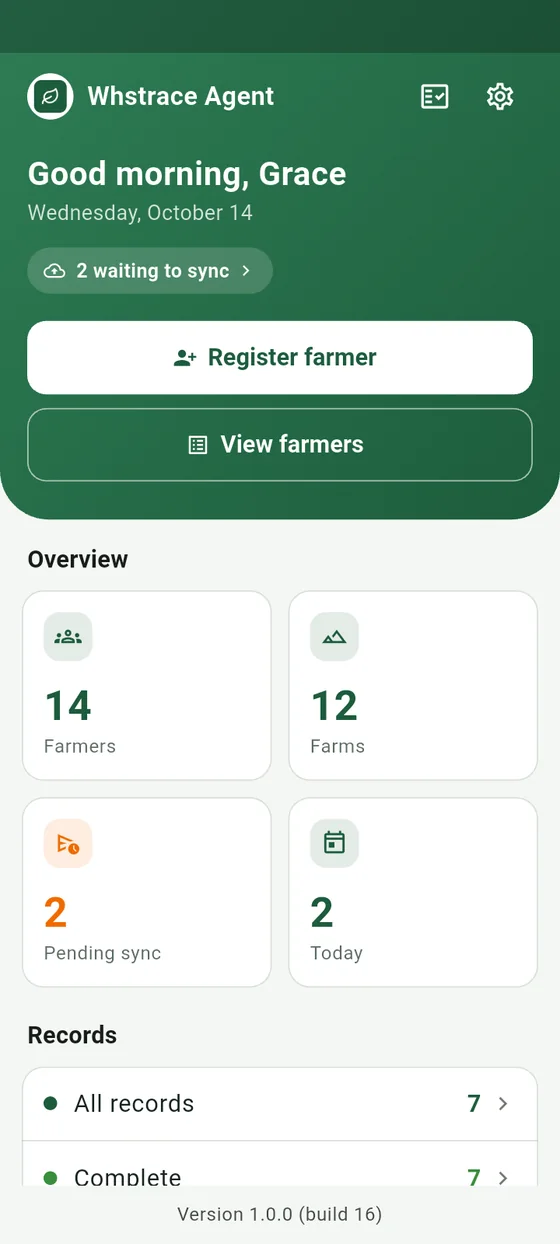
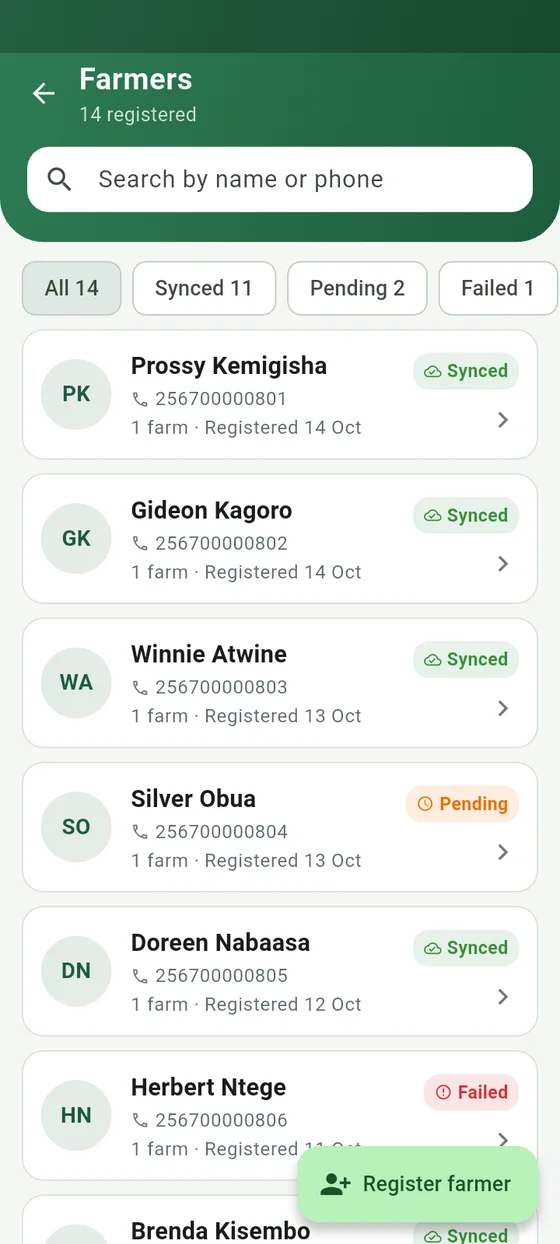
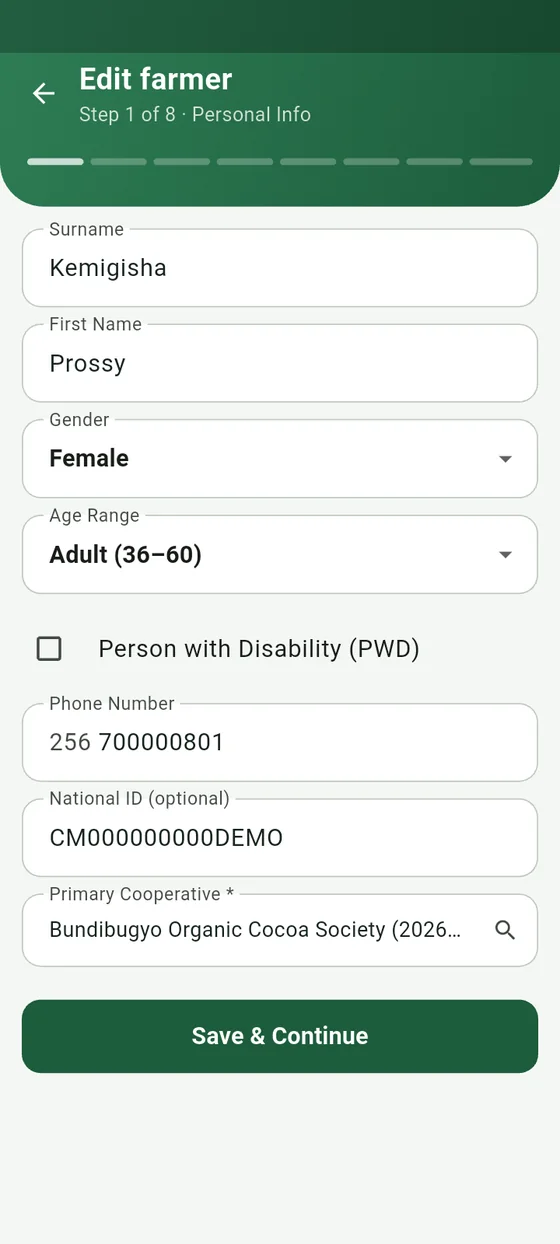
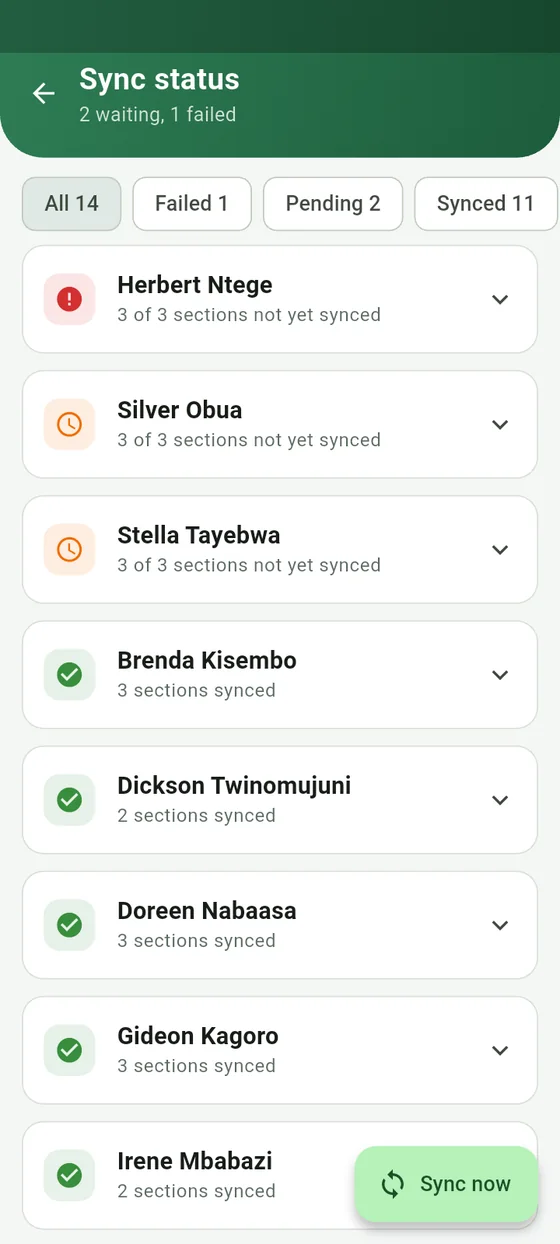
Android, offline first. Officers register farmers, walk plot boundaries and answer the farm questionnaire with no signal. Records sync when a connection returns.
Whstrace, the WHSPKAH flagship
Whstrace is the flagship traceability platform from WHSPKAH, built with Bwamba Cooperative Union and the German cooperation. Field officers register farmers and map plots without a signal, satellites check every plot for forest loss, and the evidence is on file when a buyer or a regulator asks.
 Press release · 14 Oct 2026Inside Whstrace: how we built an EUDR compliance and traceability engine
Supported byGerman cooperation, GIZ Uganda

Deployed withBwamba Cooperative Union

Made in Kampala byWHSPKAH Research and Business Network
The EU Deforestation Regulation
Cocoa and coffee placed on the European market must come from land that was not cleared of forest after 2020. The proof starts with the farmer, long before an exporter files anything.
A GPS point for small plots and a polygon for plots over four hectares, captured on the farm and kept with photos of the boundary points.
Each plot is checked against forest cover and tree-cover loss since the 31 December 2020 cut-off, and against protected areas.
The due diligence statement, the records behind it and the history of every change have to be available to the authorities for five years.
Many smallholder supply chains still begin with a paper register. Whstrace builds this file while the cocoa is being bought, plot by plot.
The same records feed an Android app in the officer's hand, an admin console in the cooperative office and the due diligence file a buyer reads.
Android, offline first. Officers register farmers, walk plot boundaries and answer the farm questionnaire with no signal. Records sync when a connection returns.
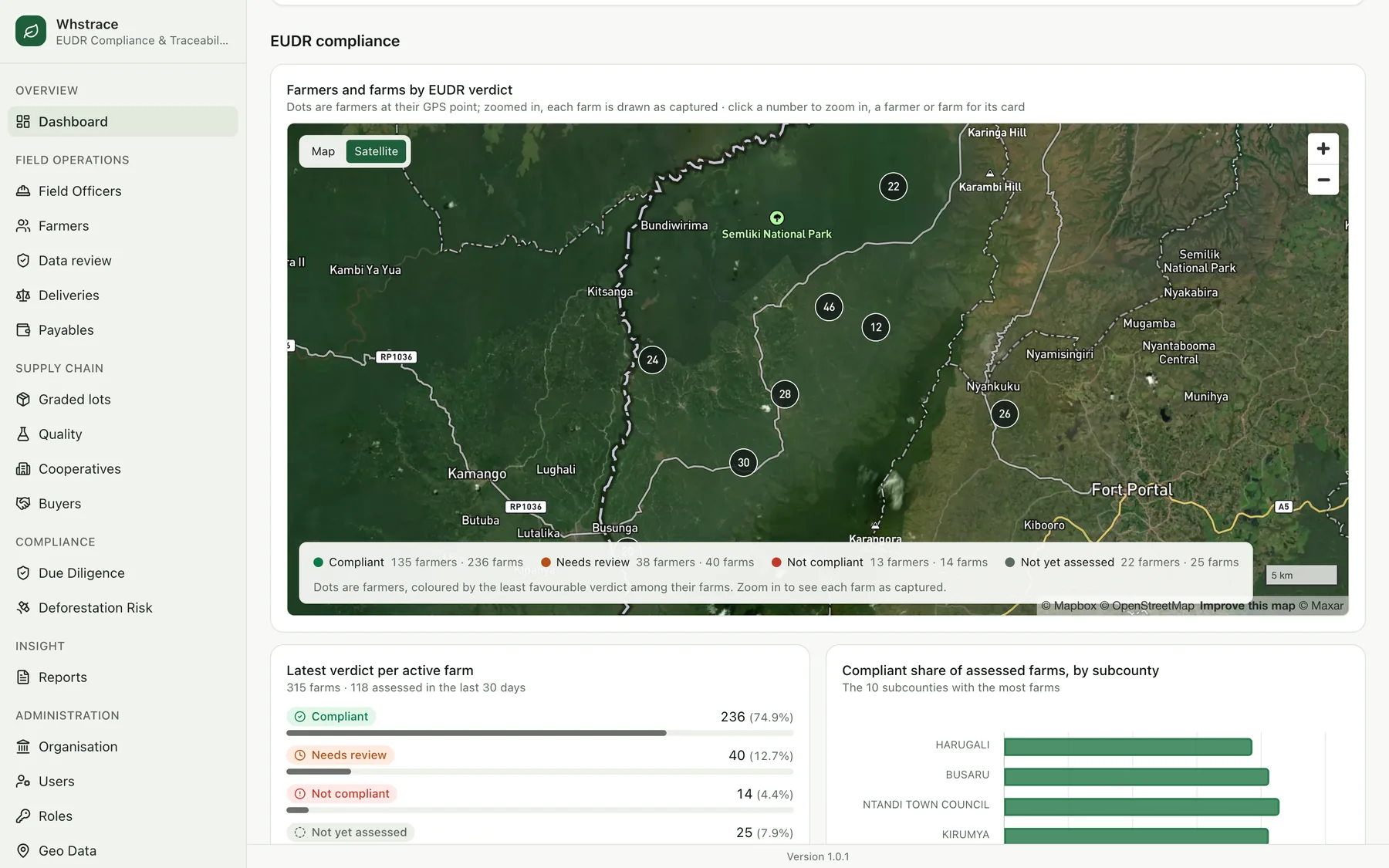
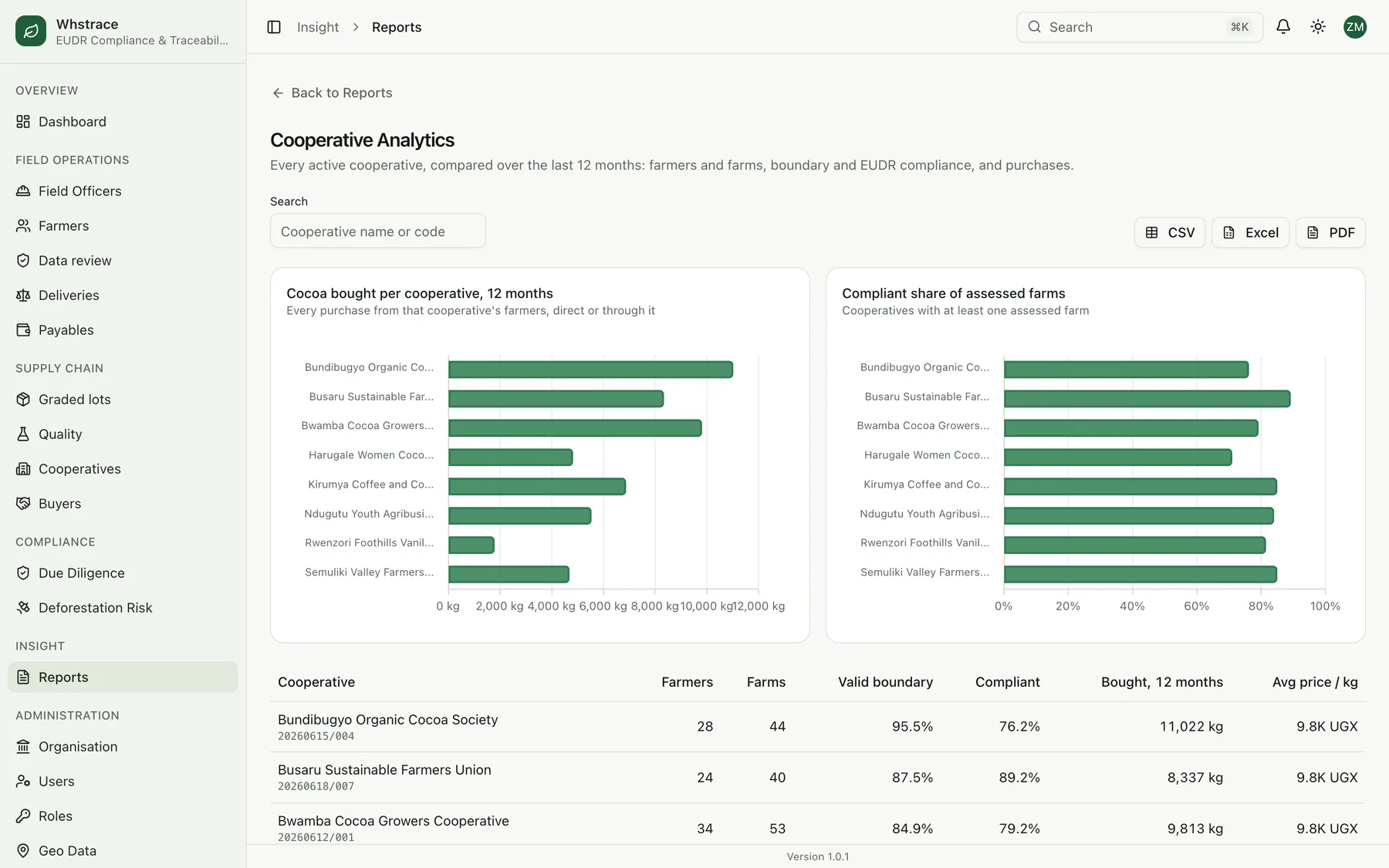
The registry, cooperatives, field officers and questionnaires, with every change attributed to a person.
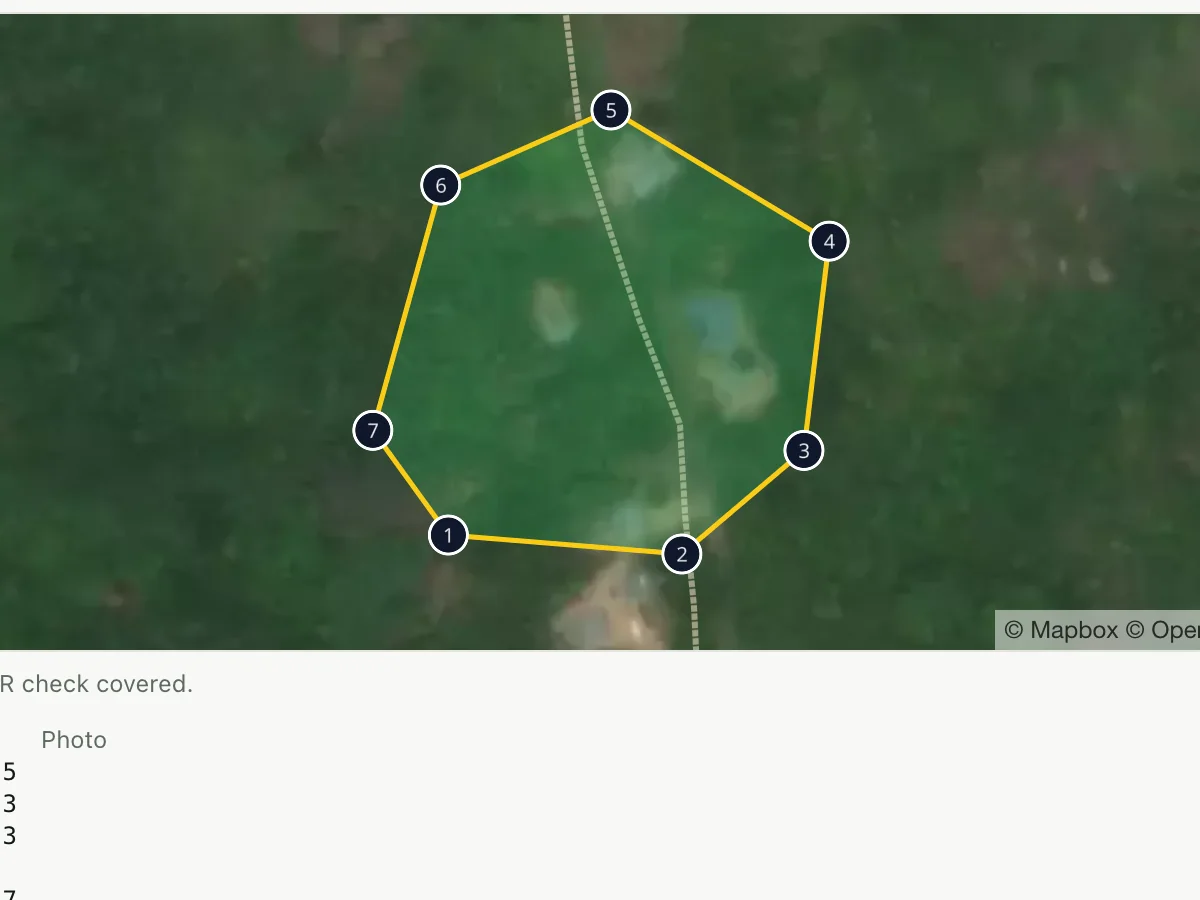
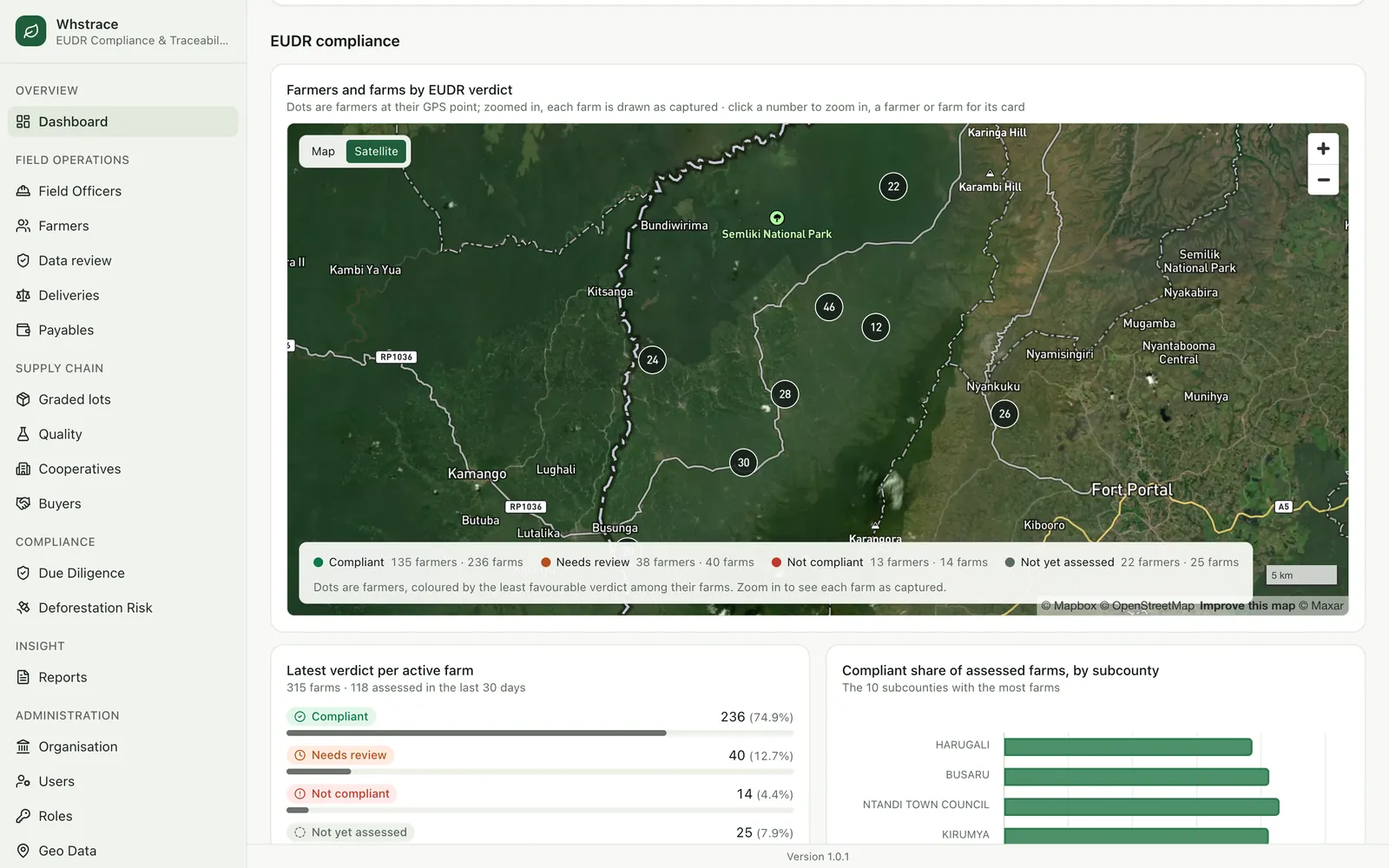
Every boundary is checked against forest and satellite data, and the verdict is stored with its evidence.
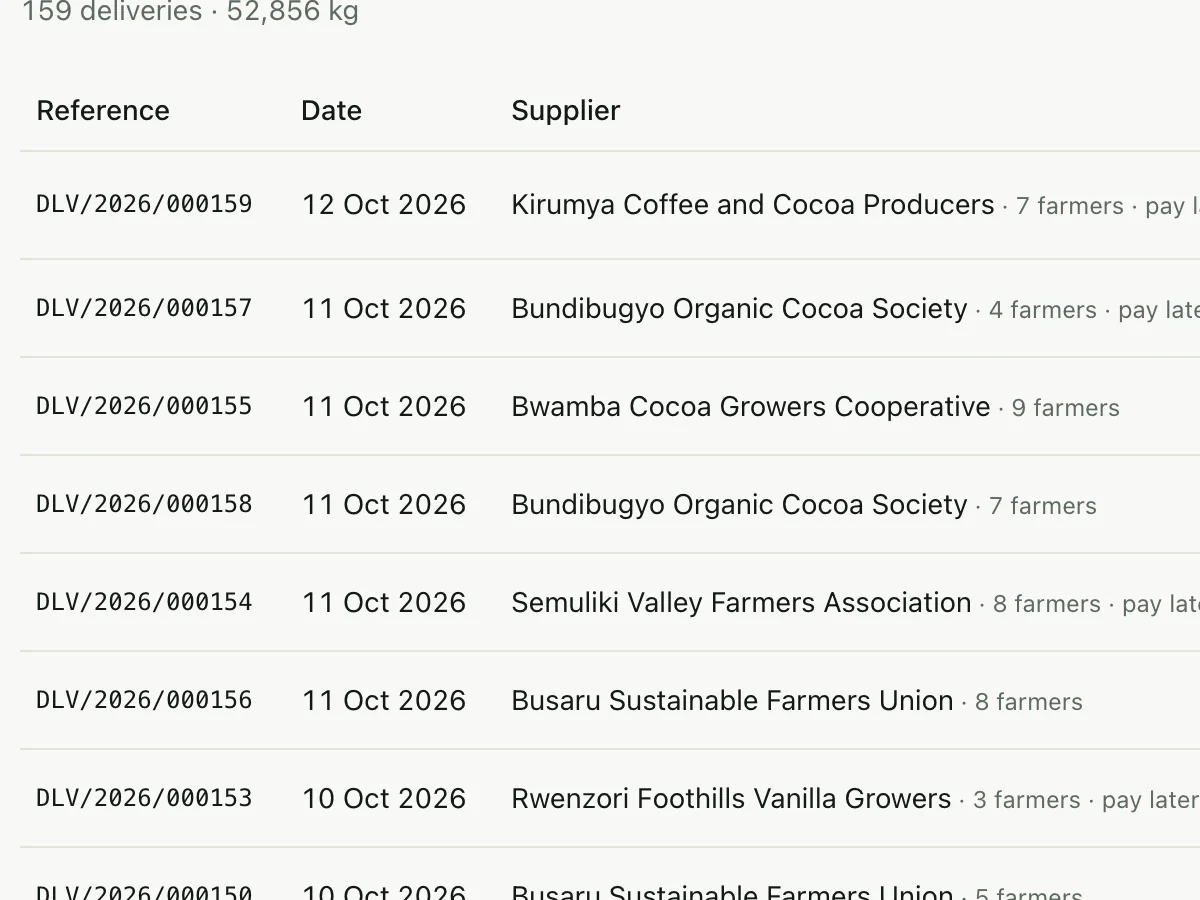
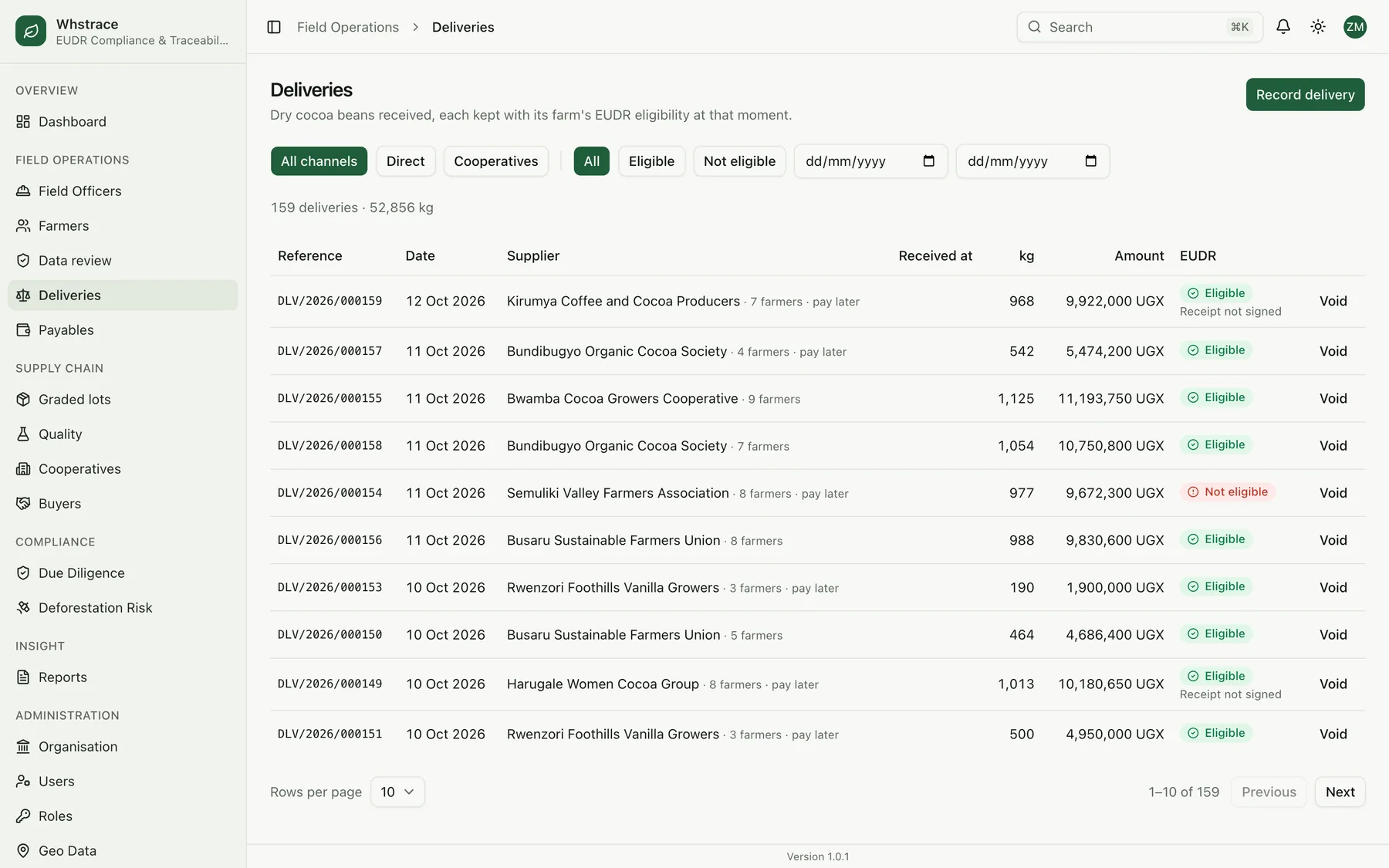
Deliveries, signed receipts, grading, quality and what is owed to suppliers.
Due diligence packages
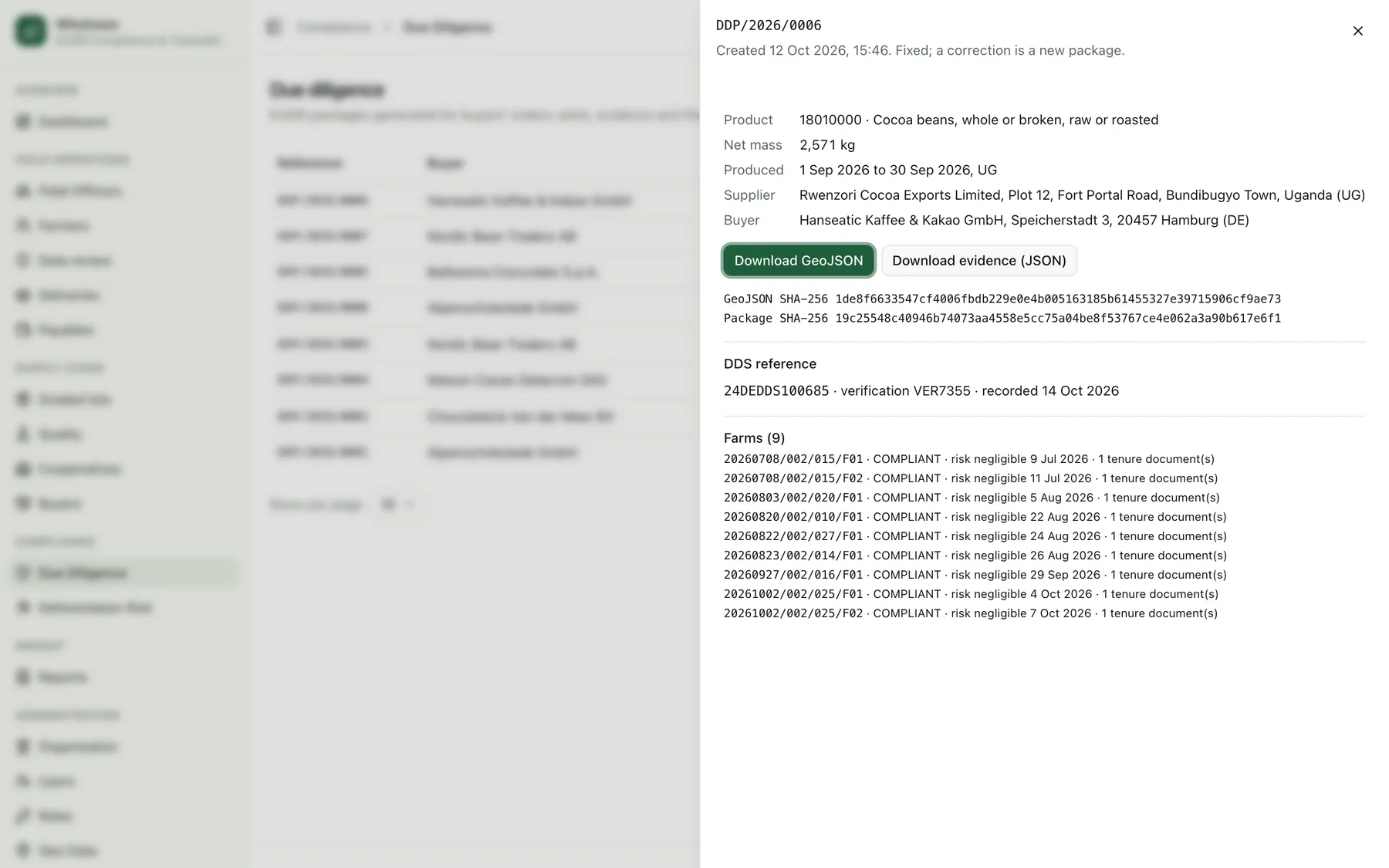
Plots, verdicts, satellite evidence, receipts and statement references are assembled into one package per shipment, each with its own checksum.
Compliance, built in
Most tools bolt compliance on at the port. Whstrace builds it in where the cocoa grows, so every line of a due diligence statement points back to a plot, a satellite check and a signature that nobody can rewrite.
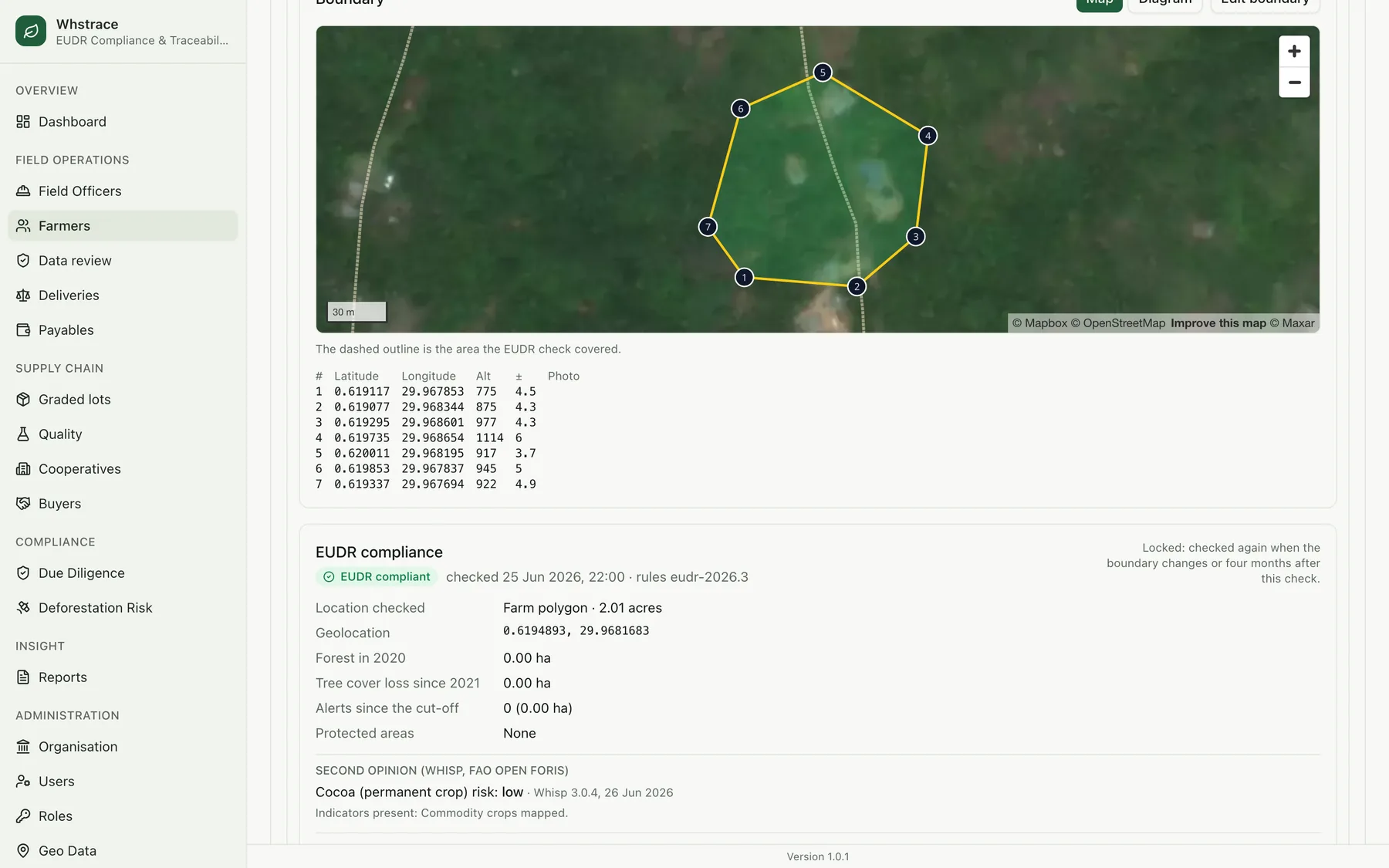
A farm's boundary, its verdict, the datasets behind it and a second opinion, on one screen.
Plot geolocation that holds up when someone drives out to check it.
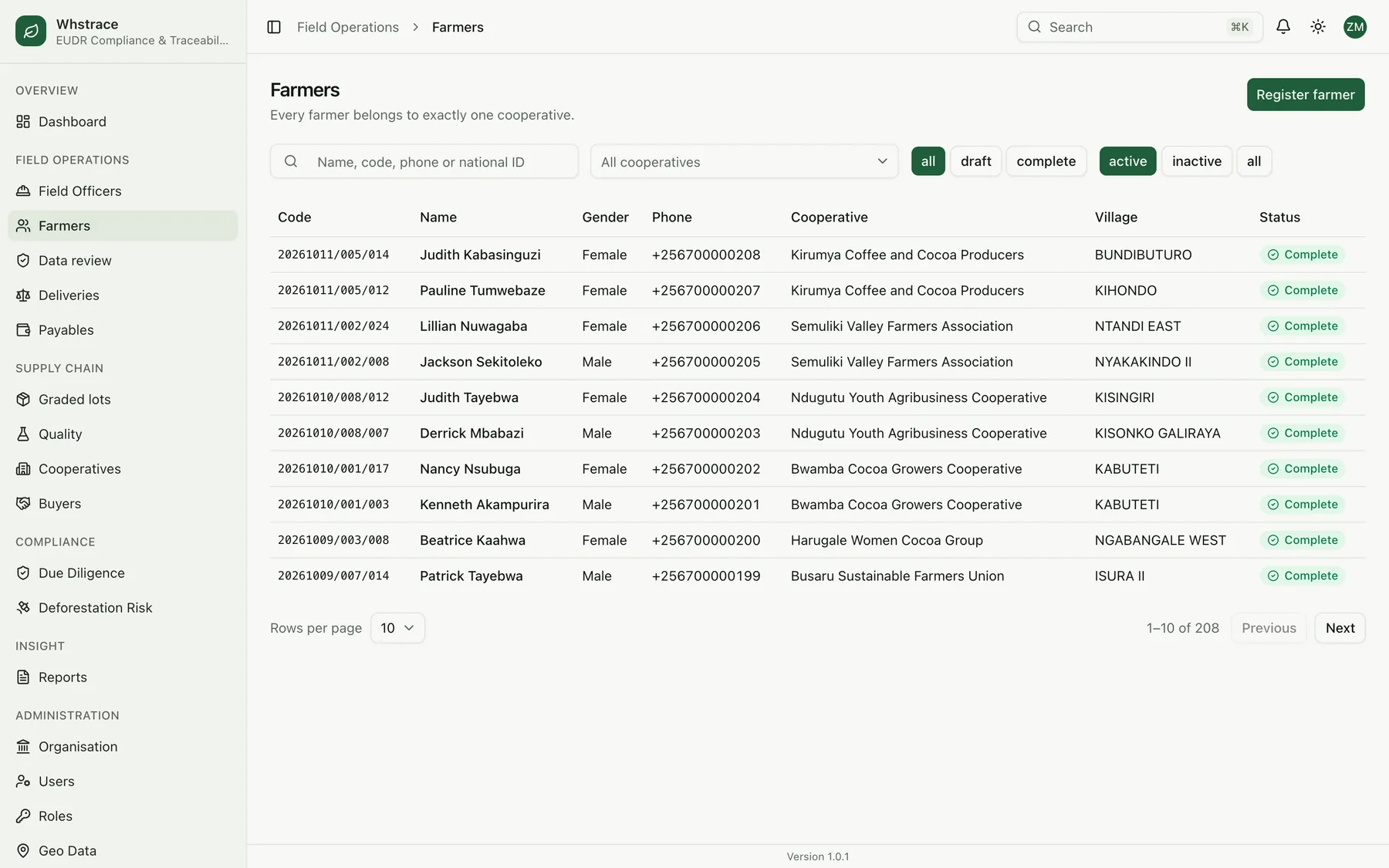
Deforestation screening that reads the same data regulators read.
Every answer arrives with its reasons, its sources and a fingerprint.
Legality evidence with expiry dates, owners and a second pair of eyes.
Supply chain records that carry compliance forward at every step.
Due diligence packages that assemble themselves.
Trust that comes from the design, not from promises.
How we built it
We started from the field, where connections drop and phones are modest, and worked toward the file a regulator reads. Each layer was built so the next one could trust it.
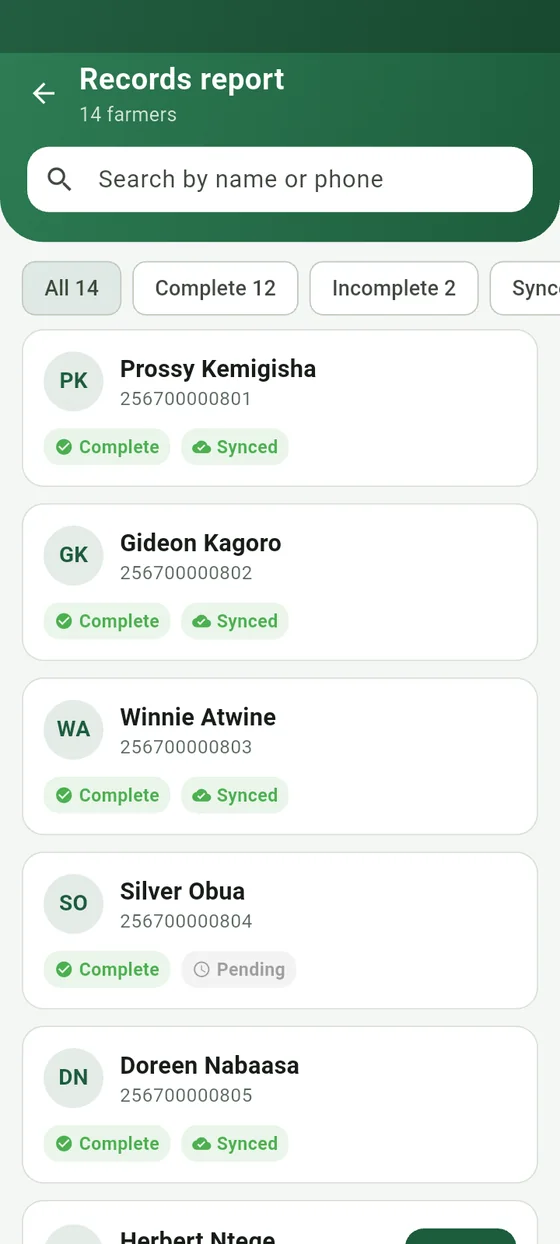
The field app is built offline first. Every farmer, farm and answer is saved on the phone before anything is sent, and a queue retries in the background until the server confirms it. A dropped connection can never create a duplicate farmer.
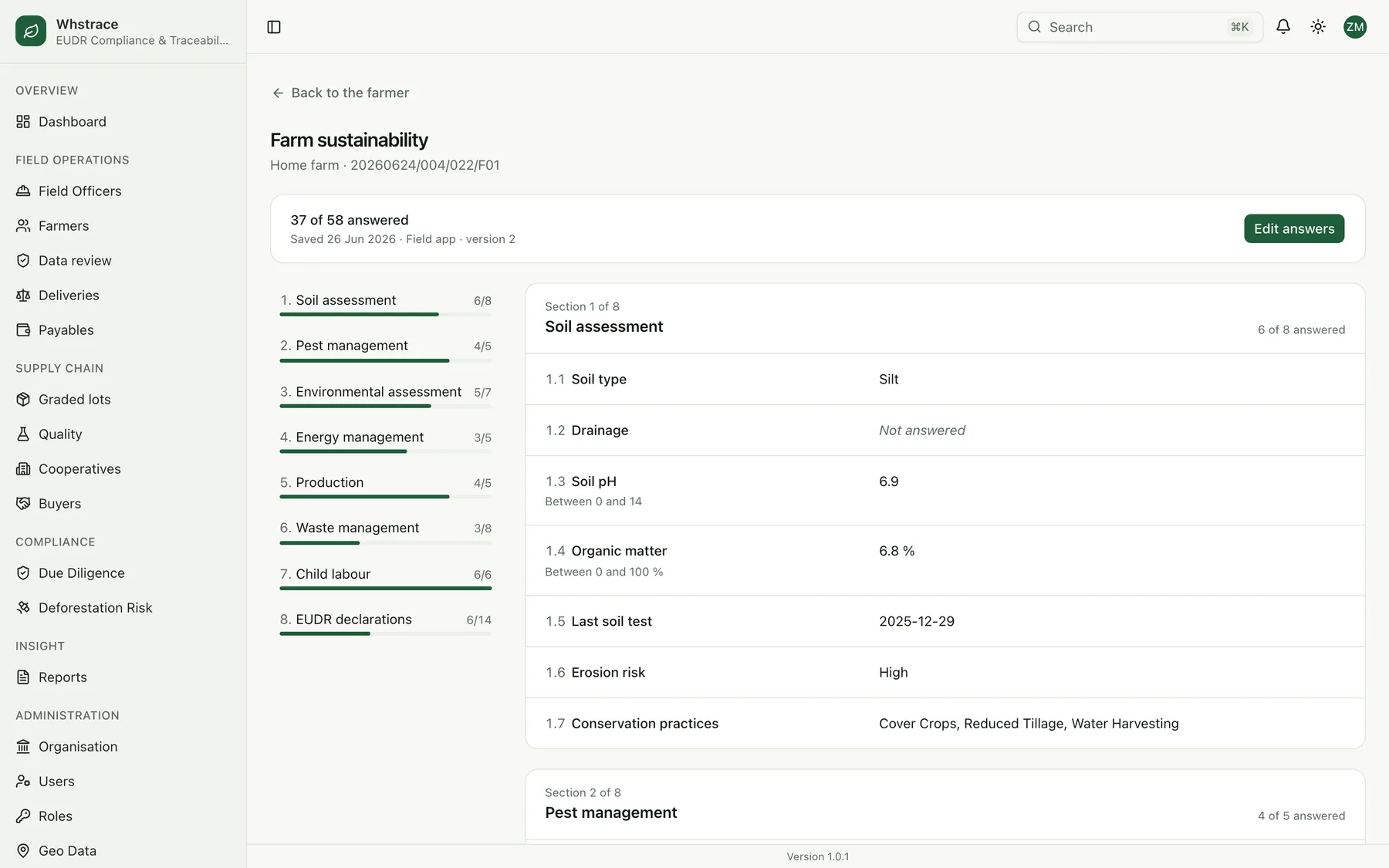
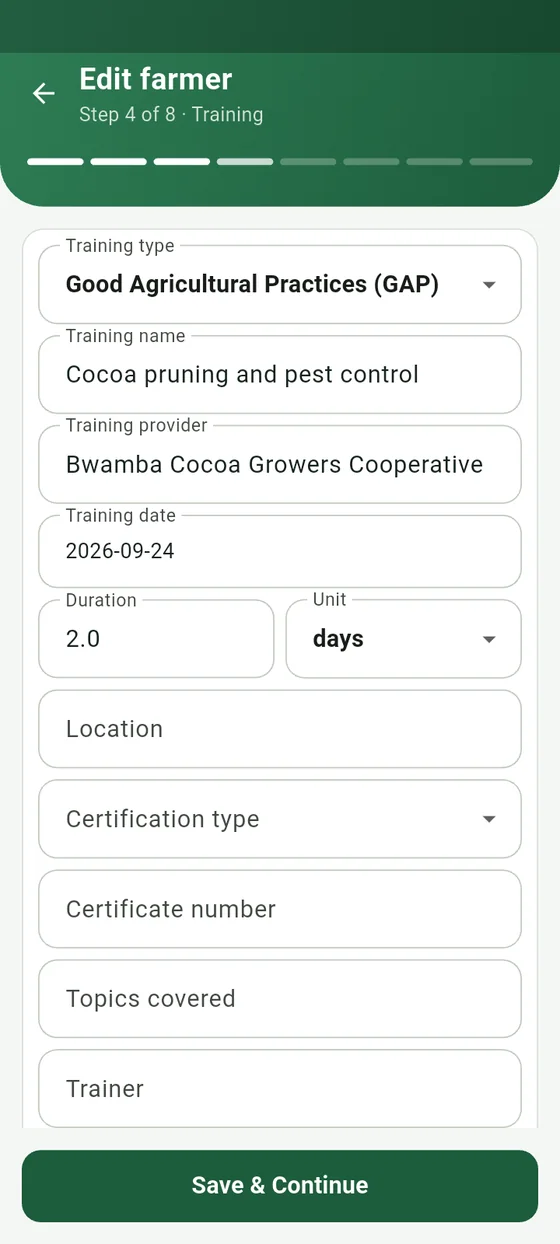
Officers walk the edge of each plot and the phone records every point with its accuracy and a photo. The farm questionnaire is data, not code: a new version is published once and every phone downloads it at the next sign-in.
The compliance engine measures forest cover at the 2020 cut-off, tree-cover loss and deforestation alerts since, overlap with protected areas and with other farmers' plots. A second opinion comes from a separate analysis. The verdict is stored with its evidence and a SHA-256 fingerprint.
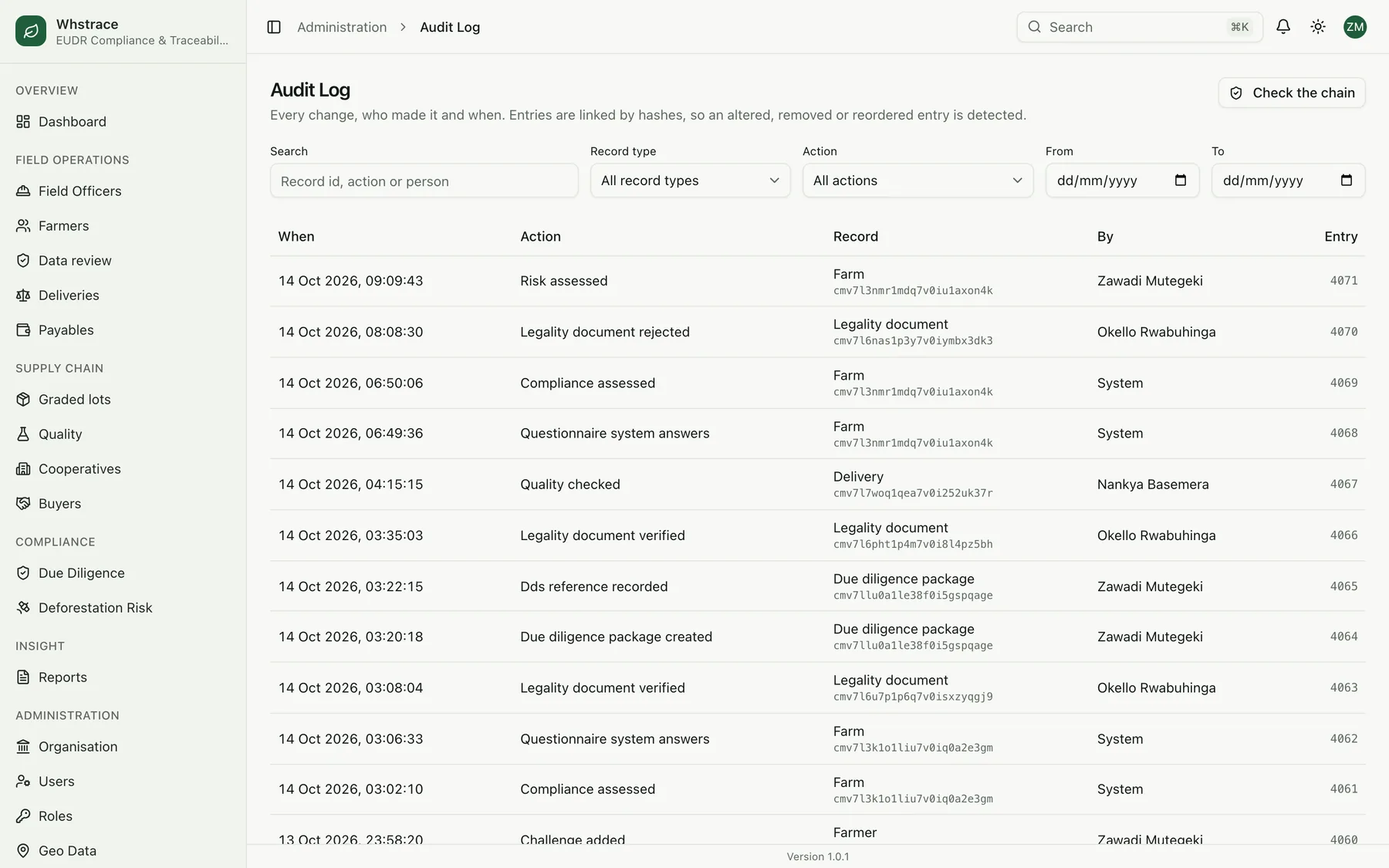
Every change to a farm, a receipt or a verdict is written to an append-only log where each entry carries the hash of the one before it. One check walks the whole chain and names the first entry that does not match. Field officers only ever see the records they registered.
Deliveries are graded into lots and lots are packaged for a buyer: the plots behind them, their verdicts, the evidence, the receipts and the statement reference, each package with its own checksum. Cooperatives and buyers read from the same records.
The platform is organised by domain, so the compliance engine, the supply chain and the audit chain can change without touching each other. Everything lands in one trusted record, with the files and satellite results kept beside it.
Field app
Saves first, syncs when it can.
Admin console
Role based.
Whstrace platform
Organised by domain.
Records and files
One trusted record, with the evidence stored beside it.
Outside intelligence
Copernicus, Global Forest Watch, Whisp, Mapbox, OpenStreetMap.
Whstrace does not guess at deforestation. It asks the same public datasets and services that regulators and researchers trust, and keeps each answer with the evidence.

Sentinel-2 satellite imagery
Optical imagery of each plot, from the European Union's Earth observation programme.

Sentinel mission
The Sentinel satellites that supply the Copernicus imagery.
Tree-cover loss and alerts
Tree-cover loss since 2021 and integrated deforestation alerts, read through the GFW Data API.

Forest cover in 2020
The Global Forest Cover 2020 map used as the EUDR baseline.
Second opinion
An independent deforestation risk analysis that we compare with our own verdict.

Maps and satellite basemap
The maps and satellite layers in the admin console.
Protected areas
Protected-area boundaries that every plot is tested against.
Logos and names belong to their owners and are shown to credit the data and services Whstrace uses. Their appearance here does not imply endorsement.
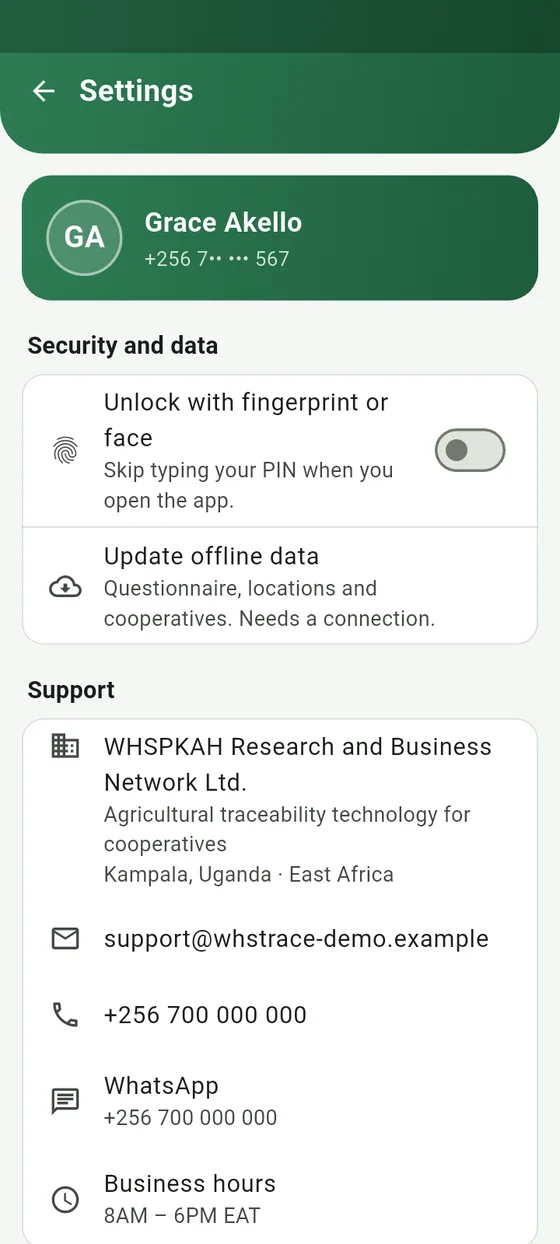
The field app
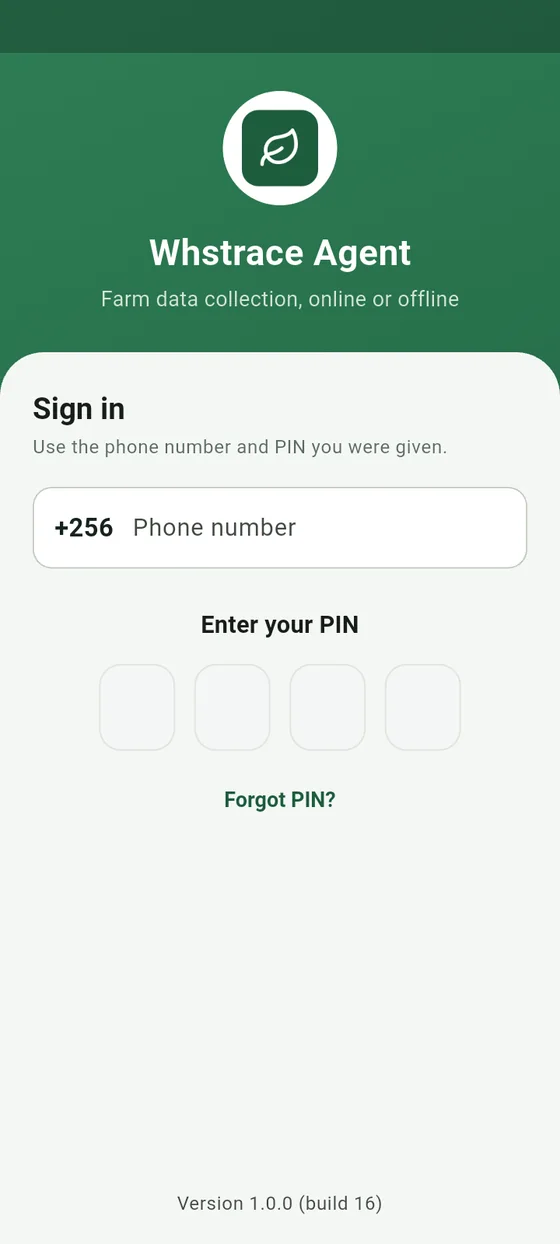
Field officers carry the traceability system in their pocket. The app was tested on entry-level Android phones, on mobile data that comes and goes.
Locations, cooperatives and the questionnaire are downloaded at sign-in, so a day in the hills needs no connection.
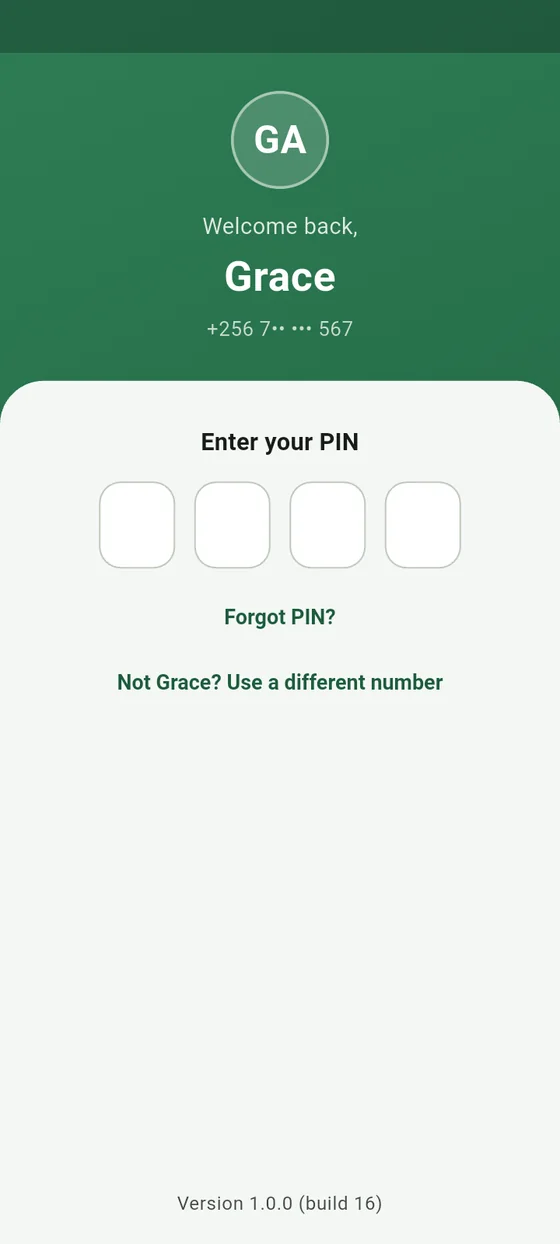
A returning officer is greeted by name and unlocks with a fingerprint or a PIN.
Each record carries its own id, so a retry after a dropped connection updates it instead of adding a copy.
In use today
Bwamba Cooperative Union and its member cooperatives use Whstrace to register their growers, map their land and prepare cocoa for European buyers. What the field team collects is the same record the compliance desk reads.
Newsroom
Press release
A technical look at Whstrace: an offline-first field app, PostGIS plot checks against satellite data, a hash-chained audit log, and what comes next for other crops.
Read the release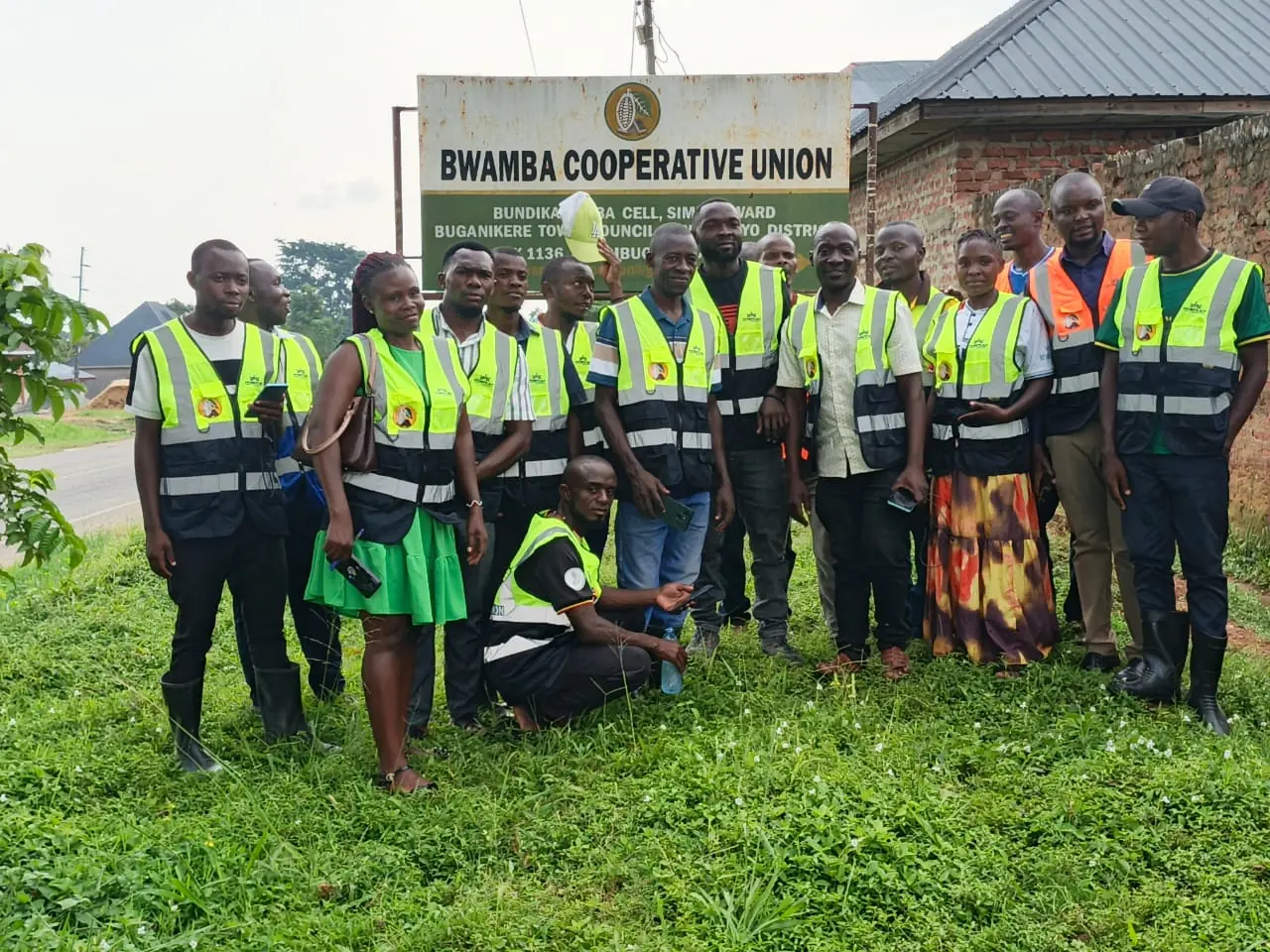
Press release
How WHSPKAH and Bwamba Cooperative Union built Whstrace, a cocoa traceability platform for EU deforestation rules, with funding support from GIZ.
Read the releaseWhy this is the future of agricultural traceability in Africa
TraceabilityinAfricashouldnotdependonaconsultantwithaclipboard.Itshouldliveinsidethecooperative,onthephoneinthefieldofficer'spocket,andinarecordthatnobodycanquietlyedit.Whentheevidenceisbuiltwherethecropgrows,thefarmerstopsbeinganameonaspreadsheetandbecomesthefirstlinkinasupplychainthatcanproveitself.
01
Offline first is the starting point, not a feature added later. The app saves locally and the sync catches up.
02
A plot is compliant because a dated satellite check says so, stored with its fingerprint, not because someone ticked a box.
03
Cooperatives manage their own members and officers. The people who know the land stay in charge of the records.
04
Cocoa came first. Coffee, vanilla and other EUDR commodities use the same plots, questionnaires and checks.
About WHSPKAH
WHSPKAH Research and Business Network Ltd. advises organisations on business development, software development and project management, and delivers the work alongside them. Whstrace is our flagship product: it came out of working with Bwamba Cooperative Union and the German cooperation on what traceability needs to look like in the field.
Market and value-chain strategy, partnerships and the business case behind an idea.
Custom systems designed with the people who will use them, from first sketch to running service.
Plans, budgets and delivery for programmes that involve donors, cooperatives and field teams.
Research, policy and compliance advice, including readiness for the EU deforestation regulation.
With the support of
Whstrace was developed with the support of GIZ in Uganda, working with Bwamba Cooperative Union to put traceability in the hands of the people who grow the cocoa.
Book a demo
We will walk you through the field app, the compliance checks and a due diligence package, using records that look like yours.